
Local Law 11
Everything NYC Property Owners Need to Know
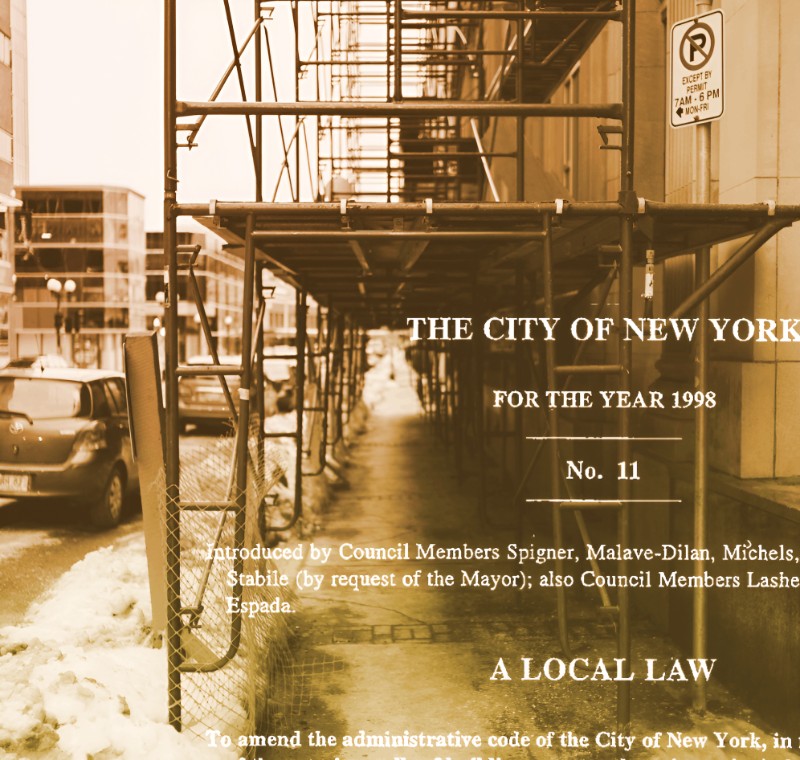
As a property owner in New York City, you’ve heard of Local Law 11, especially with the city’s promised stricter enforcement in 2026. Do you know how to protect your investments?
Read our complete guide here, and reach out to our team with zero commitment.
- WHAT IT MEANS FOR YOU
- HOW TO FILE
- HOW TO REDUCE COSTS
Take control of your building - scroll down.

What is Local Law 11?
To dive a little deeper: Local Law 11, also known as FISP, requires that New York City’s building facades must be inspected for safety every five years to protect pedestrians from dangerous falling debris.
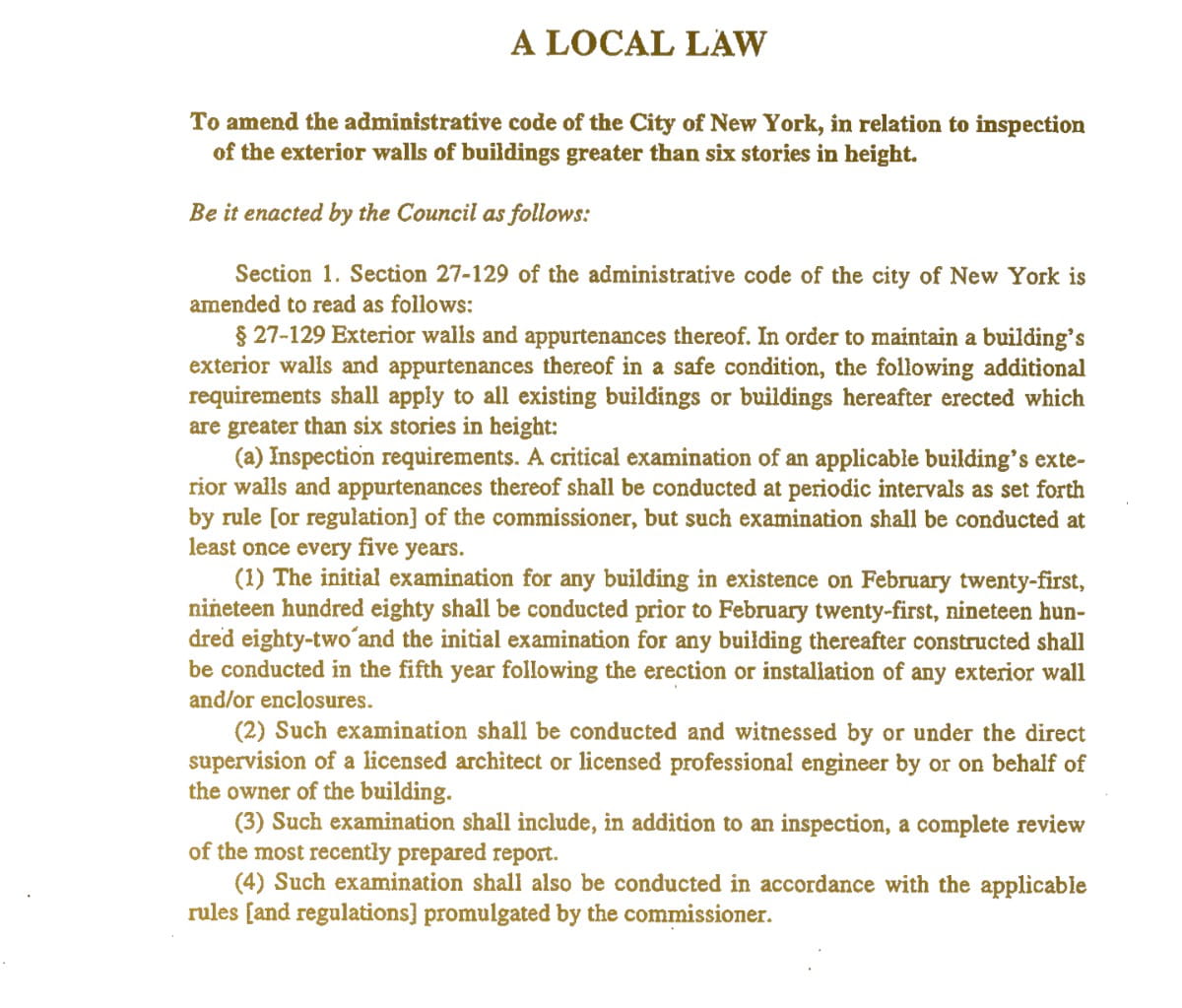
This law applies to all buildings over six stories in height, and covers both the walls of the building themselves as well as anything attached to them.
Inspections by NYC-certified inspectors must be conducted at a minimum of every five years.
The building's owner is responsible for procuring an NYC-certified inspector.
FISP INSPECTIONS REQUIRED EVERY 5 YEARS
ALL BUILDINGS OVER 6 STORIES QUALIFY
INSPECTORS ARE LICENSED BY THE CITY
VIOLATIONS INCUR SIGNIFICANT PENALTIES
YOU MUST FILE A REPORT EVERY FIVE YEARS
Here's the "statuses" you can receive.
Safe
The city of New York acknowledges that your building has no structural deficiencies.
IN THE CLEAR
If designated Safe, you can rest easy – no penalties or responsibilities for five years.
SWARMP
Stands for “Safe with a Repair & Maintenance Program.” Your building needs attention from a professional.
UPDATES REQUIRED
You must hire an architect or engineer firm to fix your building’s issues within five years. We can help with that.
Unsafe
Your building poses a threat to public safety and immediate attention is needed.
SIDEWALK SHED REQUIRED
On top of being required to hire an architect or engineer firm ASAP, you must immediately erect a sidewalk shed. We’ll handle this for you.
Let us determine your current status for you
Now, let’s make it happen.
All your questions answered below:
So how do I file?
Local Law 11 filing is key to avoiding significant fines and rushed repairs, but it can be filled with minefields. Make sure you’re filing the right report at the right time.
The first step is to hire a property manager who will coordinate with an inspector to get it done.
When should I file?
NYC has separated buildings into three categories:
10A: Block numbers ending in 4, 5, 6, or 9. Must file between Feb 21, 2025 and Feb 21, 2027.
10B: Block numbers ending in 0, 7, or 8. Must file between Feb 21, 2026 and Feb 21, 2028.
10C: Block numbers ending in 1, 2, or 3. Must file between Feb 21, 2027 and Feb 21, 2029.
You can find your category here, but here’s the catch: you can cover yourself for 7+ years by filing at just the right time. Get in touch and we’ll take care of it.
What if my building is uniquely shaped?
Buildings with a unique shape must submit a different Local Law 11 report.
Get in touch and we’ll help you find out which report type you need to submit.
What else should I look out for?
Firstly, account for the DOB’s (Department of Buildings) backlog. You’d be surprised how often projects are delayed. Timing is key.
Secondly, inspectors are required to report every violation, no matter how small. That includes things like tenant protection notices next to elevators. Make sure you’re as up-to-code as possible before hiring a Local Law 11 inspector. We can help.

How much does this cost?
And can I save money?
Let’s cut to the chase: yes, you can save money.
Many building owners who receive a SWARMP or Unsafe rating decide to put up sidewalk sheds, ignore necessary repairs, and accept ever-increasing violation fees.
This may be easier short-term, but it's devastating long-term.
By efficiently managing your inspections, repairs, timing, and tenants, you can save millions of dollars and avoid these fees.
For example – by filing ahead of time like we do, we can avoid an entire five-year cycle of inspections and repairs while staying compliant.
Now, the big question:
Am I at risk?
All buildings in New York City are required to comply with Local Law 11, but some are at higher risk for SWARMP or Unsafe ratings:
- Buildings with elaborate facades
- Pre-World War II buildings
- Buildings with concrete balconies
- Buildings not uniform in shape
I fall into one of those categories.
What should I do?
Here’s your itinerary.
- Determine your cycle
The city has designated three “cycles,” which determine when you need to file. Find yours here, or get in touch.
- Find your rating
Find out what the result of your previous inspection was, if you’ve had any. You can do this at the same link above.
- Hire a property manager
Your property manager should be able to efficiently manage Local Law 11 filings and repairs.
- Conduct an inspection
Your property manager will hire a QEWI-certified inspector and manage their reporting and filing.
- Complete repairs
If applicable, complete repairs required by your Local Law 11 rating, and set up a sidewalk shed if needed.
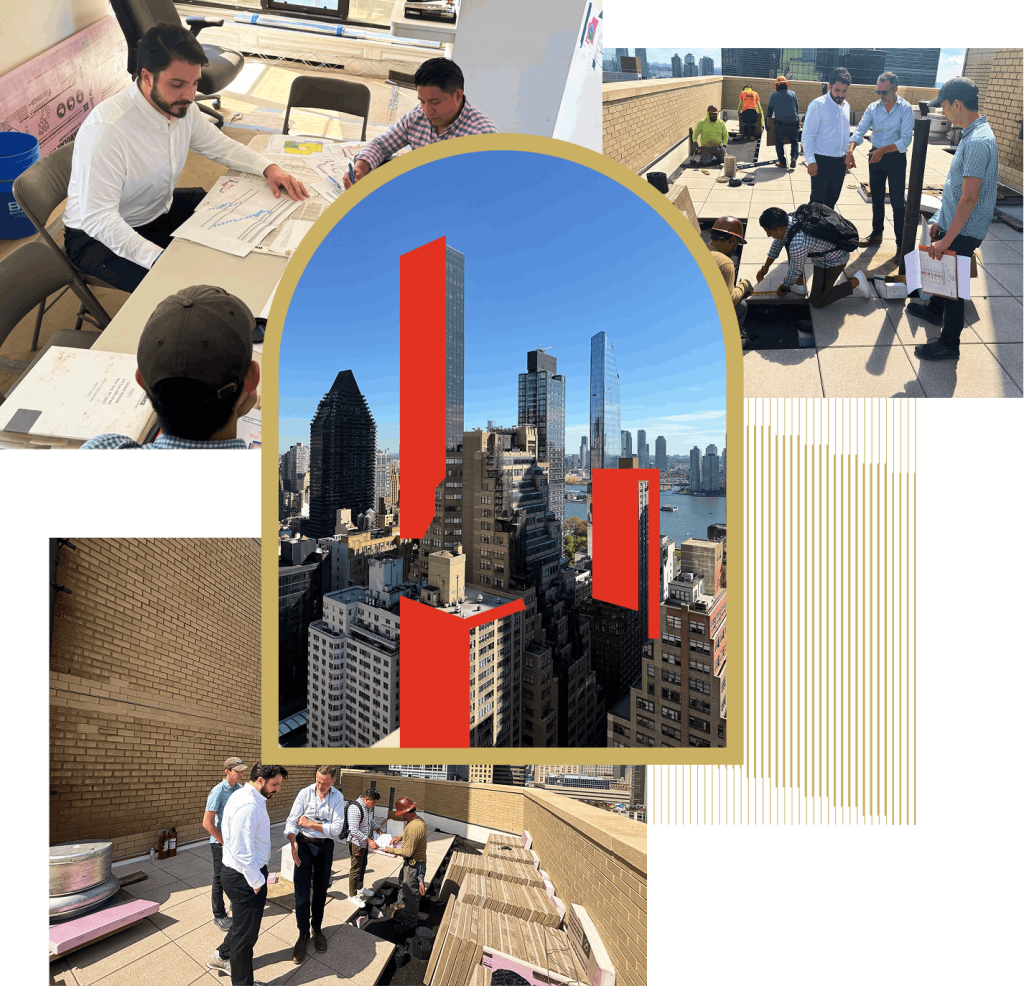
We’ve done this before.
Get in touch.
Verado Property Management specializes in Local Law 11 assistance for mixed-use and multi-family buildings in Manhattan and the surrounding area.
Reach out. We’ll help with your Local Law 11 filing.
What does QEWI mean?
“QEWI” stands for Qualified Exterior Wall Inspector. This refers to architects and engineers who have received a certification from the NYC Department of Buildings.
QEWI-certified inspectors are required by the city when you conduct your Local Law 11 inspections.
What do I need to inspect?
Any piece of your building that faces pedestrians – walls, balconies, design pieces, gargoyles, framing, or anything that could potentially crack or be rendered unstable – must be inspected by a QEWI professional as part of your Local Law 11 filing.
Will Local Law 11 violation fees go up?
Yes, violation fees are planned to increase. Mayor Zohran Mamdani has promised to increase pressure on building owners to comply with Local Law 11 as part of efforts to keep the city safe for pedestrians.
Beyond the planned violation fee increase, if compliance is still not certified, the city has promised to hire its own contractors to complete the job and pass the full cost onto the building owner.
How do I see my building's FISP status?
You can find out if your building is rated as Safe, SWARMP, or Unsafe using New York City’s website DOBnow – click here to check it out.
Alternatively, you can get in touch with Verado Property Management, and we’ll run checks on your building and guide you through the process.
Will FISP repairs cause issues for my tenants?
Many managers would respond with a resounding yes. However, it’s absolutely possible to conduct Local Law 11 inspections and repairs without disrupting everyday life for your tenants.
Beyond higher tenant satisfaction, proper implementation of Local Law 11 management can improve your building’s marketability, street appeal, and financial wellness.
Get in touch to see how Verado Property Management can manage FISP/Local Law 11 inspections and repairs through detailed, methodical work and a deep understanding of the law.
What happens if I don't comply with Local Law 11?
If you don’t comply with your filing and repair requirements for Local Law 11, you’ll incur significant fines and emergency repair mandates from the city.
Frequently Asked Questions